
TRF Event Recap: Chubu-Hokuriku
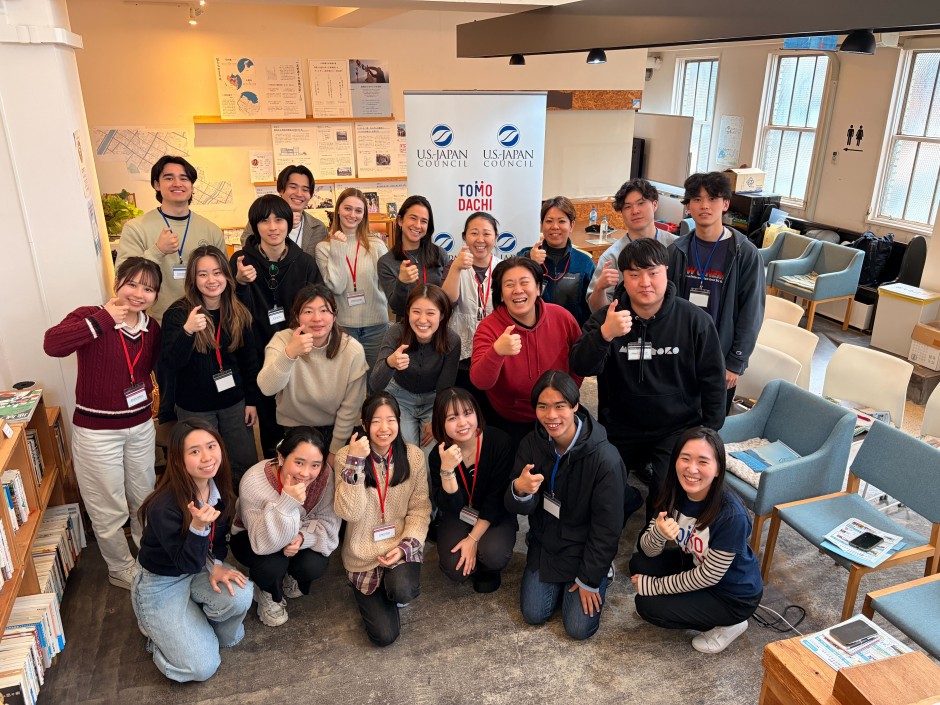
On March 14 – 15, 2026, TOMODACHI Chubu-Hokuriku Region held a program in the Noto Peninsula focused on disaster resilience and sustainability attended by both USJC members and TOMODACHI alumni. A total of 20 people participated.
Two years after the devastating earthquake that struck the Noto Peninsula on January 1, 2024, a group of TOMODACHI alumni gathered for a two-day learning experience in Ishikawa Prefecture to reflect on resilience, recovery, and community rebuilding.
The program began in Nanao City with a panel discussion focused on disaster resilience, sustainability, and community-centered rebuilding. Participants explored the concept of machizukuri (community development) and discussed the distinction between recovery (fukkyū) and reconstruction (fukkō), emphasizing the importance of the “Build Back Better” approach. Conversations also connected lessons learned from the Great East Japan Earthquake of 2011 with the ongoing recovery efforts in Noto.
On the second day, participants joined a kataribe storytelling tour in Wakura Onsen, a town heavily affected by the earthquake. Through firsthand accounts from local residents and hospitality professionals, alumni gained a deeper understanding of the resilience and dedication of the community as it works to rebuild and welcome visitors once again.
The program was led by Shiori Sata, TOMODACHI Regional Representative for Chubu-Hokuriku, with support from core committee members Moeko Yamada and Keigo Konno. Logistical support was provided by Rimpei Takahashi, the TOMODACHI Regional Representative for Tohoku, through the Tohoku-based nonprofit MACHITOKO. Their collaboration and attention to detail helped create a meaningful and impactful experience for the participating alumni.
During the closing reflection session, several alumni shared insights that captured the spirit of the program.
Keita Naka Kosashi reflected that “What left a strong impression on me was when Mr. Moriyama said, ‘Reconstruction is not about returning things to how they were, but about anticipating the next stage of civilization.’ It made me realize that simply restoring things to their pre-disaster state does not necessarily mean the community will be sustainable in the future.”
For many alumni, the experience reinforced an important realization: resilience is not only a policy concept or recovery strategy. It is deeply human—shaped by the stories, relationships, and communities that people carry with them long after a visit ends.
Organizers hope that experiences like this can continue in the future, potentially evolving into an annual opportunity for alumni to learn directly from communities affected by disasters and to strengthen connections that inspire future action.